October is Breast Cancer Awareness Month, a time to learn more about breast cancer, the importance of early detection and the everyday choices that can support our long-term health.
One area worth exploring is the relationship between physical activity, strength training and breast cancer risk. Research increasingly highlights the role of regular exercise in supporting overall health, while emerging studies are investigating how working our muscles may influence processes linked to cancer.
So, where does EMS strength training fit into this conversation? And what does the science actually tell us?
The Link Between Physical Activity and Breast Cancer Risk
Breast cancer is influenced by several factors, including age, genetics, hormonal influences and lifestyle. While there is no guaranteed way to prevent breast cancer, research suggests that regular physical activity is associated with a lower risk of developing the disease.
According to the National Cancer Institute’s review of breast cancer prevention, evidence from observational studies shows an association between physical activity and reduced breast cancer risk in both premenopausal and postmenopausal women.
This is an important finding, but it is equally important to understand what it means. Being physically active may help lower your risk, but it does not eliminate it. Breast cancer can affect women who exercise regularly, just as it can affect women who are less physically active.
Exercise should therefore be viewed as one part of a broader approach to health, alongside appropriate screening, awareness of changes in your breasts and conversations with your healthcare professional about your individual risk.
Why Does Strength Training Matter for Breast Cancer Risk?
When we think about exercise, we often picture running, walking or cardiovascular workouts. However, resistance training, which includes exercises that challenge our muscles, is another important part of a balanced fitness routine.
Strength training helps maintain and develop muscle strength, supports physical function and contributes to overall fitness. It can also form part of a routine that helps people maintain a healthy body composition.
Researchers are also exploring the relationship between muscle contractions and certain biological processes that may be relevant to cancer.
When muscles contract during exercise, they release signalling proteins called myokines. These proteins communicate with other parts of the body and are being investigated for their potential roles in inflammation, metabolism and cancer biology.
A 2025 study published in Breast Cancer Research and Treatment examined the effects of a single session of resistance training or high-intensity interval training in breast cancer survivors.
The researchers found increases in certain myokines and observed reduced growth of breast cancer cells in laboratory experiments using the participants’ blood samples.
You can read the full study here: Bettariga et al. (2025), A single bout of resistance or high intensity interval training increases anti cancer myokines and suppresses cancer cell growth in vitro in survivors of breast cancer.
These findings are encouraging and help researchers understand how exercise might influence the body’s biological environment. However, the cancer cells were studied in laboratory conditions. The results do not demonstrate that exercise prevents breast cancer in people, and they do not establish that strength training can treat cancer.
This distinction matters when discussing the potential health benefits of exercise.
Where Does EMS Strength Training Fit In?
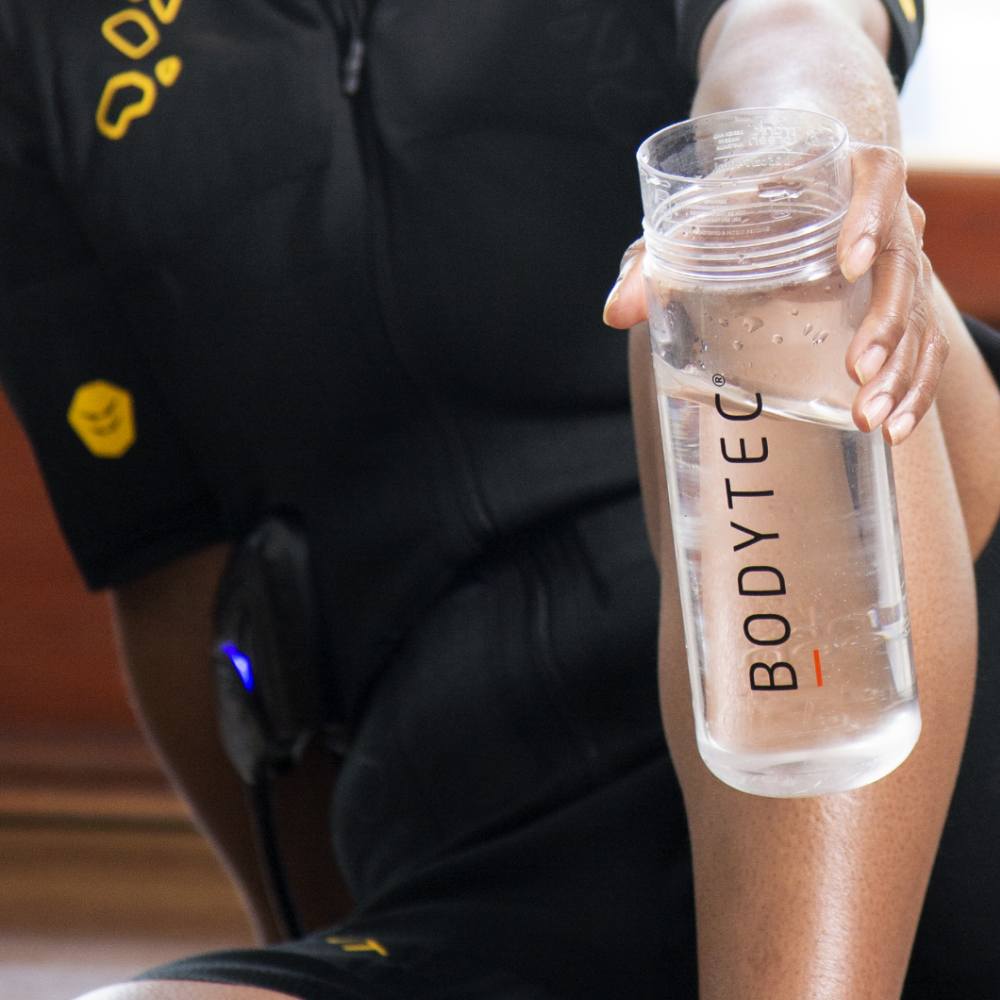
Electrical Muscle Stimulation, or EMS, is a training method that uses electrical impulses to stimulate muscle contractions while a person performs guided exercises.
At BODYTEC, a qualified coach guides each member through a personalised, 20-minute full-body workout designed to challenge multiple muscle groups. The training is low impact and provides a time-efficient way to incorporate strength training into a regular fitness routine.
Given the evidence linking physical activity with a lower risk of breast cancer, it is reasonable to consider EMS as one possible way to help people stay active and work on their strength.
However, there is an important distinction between the benefits of exercise in general and the specific effects of EMS on breast cancer risk.
Current research does not establish that EMS training prevents breast cancer. The findings from conventional resistance training research cannot automatically be applied to EMS, and further research is needed to understand whether EMS produces similar effects on myokines or cancer-related processes.
The most responsible approach is to view EMS as a strength training option that can support physical fitness, rather than as a proven cancer prevention method.
What Does Research Say About EMS and Cancer?
Although research specifically investigating EMS and breast cancer prevention remains limited, studies have explored the use of whole-body EMS in people living with cancer.
A 2024 evidence-based consensus paper reviewed research on whole-body EMS, including studies involving people with different types of cancer. The authors reported that the available evidence suggested potential benefits for muscle-related outcomes and physical function, while acknowledging that further evidence was needed.
Read the research here: von Stengel et al. (2024), Revised contraindications for the use of non medical whole body electromyostimulation.
A related research commentary also discussed findings from supervised EMS programmes involving people with advanced cancer. In one study, participants who received EMS alongside individualised nutritional support had, on average, 0.53 kg more skeletal muscle mass than the control group after 12 weeks. Improvements in certain measures of physical function were also reported.
You can read the research commentary by Reljic, Herrmann and Zopf (2024) and the original clinical study on EMS and body composition in patients with advanced cancer.
These studies explore supportive exercise outcomes in people who already have cancer. They do not demonstrate that EMS reduces the risk of developing breast cancer, and they should not be interpreted as evidence that EMS can treat the disease.
They do, however, contribute to the broader conversation about the potential role of supervised strength training in supporting muscle health and physical function.
Making Exercise Part of Your Routine
One of the most useful steps you can take is to find a form of physical activity that suits your lifestyle and that you can maintain consistently.
This might include walking, cycling, swimming, conventional resistance training or EMS strength training. Different forms of exercise offer different benefits, and a combination may be appropriate depending on your goals, abilities and health.
At BODYTEC, our approach focuses on personalised training with a qualified coach, helping members work towards their fitness goals through structured, time-efficient sessions.
If you have a busy schedule and struggle to make time for exercise, a 20-minute EMS session may be an option worth exploring as part of a broader, balanced approach to physical activity.
Remember that consistency matters, and you do not need to wait until you have a particular fitness goal to start looking after your health.
Breast Cancer Awareness Goes Beyond Exercise
While physical activity can contribute to a healthier lifestyle, breast cancer awareness also means understanding your personal risk and knowing when to seek medical advice.
Be aware of changes in the appearance or feel of your breasts, and consult a healthcare professional if you notice something unusual. Discuss appropriate screening with your healthcare provider, particularly if you have a family history of breast cancer or other risk factors.
If you have been diagnosed with breast cancer or are undergoing treatment, speak to your treating medical team before beginning or changing your exercise routine. EMS requires particular care in this context. A 2024 consensus recommendation classifies cancer as a relative contraindication for non-medical whole-body EMS, meaning that medical clearance and appropriately qualified supervision are required. A standard studio session should not be treated as a substitute for an individually assessed clinical exercise programme.
Exercise can be a valuable part of looking after your health, but it should complement, rather than replace, appropriate medical care.
A Stronger Approach to Long-Term Health
This Breast Cancer Awareness Month, take the opportunity to learn, ask questions and make informed decisions about your health.
Research supports the relationship between regular physical activity and a lower risk of breast cancer, while studies into muscle activity and cancer biology continue to develop our understanding of how exercise may influence the body.
EMS strength training offers one way to work on muscle strength and physical fitness. However, its specific role in breast cancer prevention has not yet been established.
At BODYTEC, we believe that looking after your health starts with making informed choices and finding a training approach that works for you.
Move regularly. Build your strength. Stay informed. And remember that awareness, appropriate screening and professional medical guidance remain essential.
Educational disclaimer: This article is intended for general educational purposes only and is not medical advice. EMS strength training is not a proven method of preventing or treating breast cancer. Anyone with a current or previous cancer diagnosis should consult their treating medical team before undertaking EMS training.